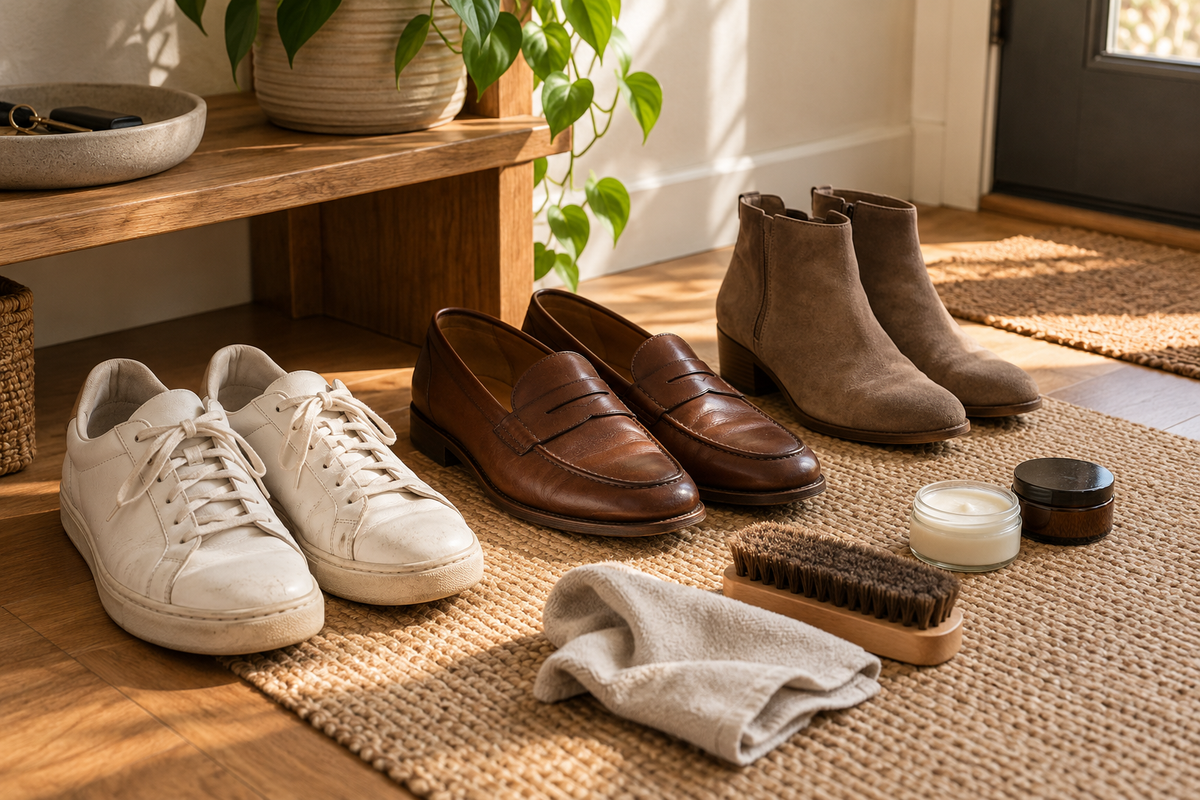
Good shoe care is less about owning a shelf of products and more about matching the method to the material. The same wet cleaner, stiff brush or conditioner that works on one pair can flatten suede, mark coated finishes or leave another pair too damp. A small, material-first routine is safer and easier to repeat.
Identify the upper material first. Remove loose dirt before adding moisture, clean with the gentlest compatible method, condition only appropriate smooth leather, use protector only when it solves a real problem, and let shoes dry completely before storage.
The five-part everyday shoe-care formula
IDENTIFY MATERIAL → CLEAN → CONDITION → PROTECT → REST + STORE
The sequence stays stable, but not every shoe uses every step. Sneakers may need a washable-material cleaner. Smooth leather may benefit from occasional conditioning. Suede needs its own brush-and-eraser route and should not receive smooth-leather cream. Protection is optional rather than automatic.
Start by identifying what the shoe is made from
Check the shoe label, manufacturer page or care card before using a product. “Leather” can describe smooth finished leather, patent leather, suede, nubuck or a coated material, and those finishes are not interchangeable. Many sneakers also combine mesh, synthetic overlays, leather panels, glue and foam in one upper.
When you cannot confirm the material, begin with dry surface care: a soft clean brush or cloth and minimal pressure. Avoid treating an uncertain finish with conditioner, solvent, household stain remover or heavy water. Valuable, delicate or badly stained shoes are better assessed by a professional than used as an experiment.
What every shoe-care routine should do first
Remove laces when they block access. Brush away dry soil before it becomes wet mud. Work over a towel, use clean tools and test any cleaner on a hidden area. Apply product to the tool or cloth when the instructions recommend it rather than saturating the shoe.
The purpose is controlled cleaning, not soaking. Excess moisture can travel into linings, adhesives and cushioning even when the visible upper appears washable. Follow both the care-product label and the shoe maker’s guidance; if they conflict, choose the more conservative route.
How to clean everyday sneakers
For compatible sneakers, begin with a dry brush around seams, midsoles and textured areas. Mix or apply the cleaner exactly as directed, work in small sections and use the softest brush that removes the soil. A microfiber cloth can lift loosened residue without repeatedly flooding the surface.
White sneakers do not automatically need bleach, whitening paint or aggressive scrubbing. Those approaches can create a brighter patch while weakening fabric, discoloring glue or changing the finish. Clean the whole compatible panel evenly and stop when repeated passes no longer improve the result.
A controlled damp-cleaning method is usually easier to rinse and dry than a fully saturated shoe. Machine washing should only be used when the manufacturer explicitly permits it.
How to care for smooth leather shoes and boots
Wipe or brush away dust first. Use a cleaner compatible with that exact leather only when needed, then allow the surface to dry according to its instructions. Conditioner belongs after cleaning and drying—not on top of grit—and only on compatible smooth leather.
Apply a small amount to a hidden area and observe the color and finish before continuing. Some leather naturally darkens when conditioned. More product is not more care: excess conditioner can create unevenness or attract soil. Buff only when the product directions and desired finish call for it.
Patent leather, coated leather, bonded leather and synthetic “leather-look” uppers may require completely different care. Do not treat them as ordinary smooth leather based on appearance alone.
How to clean suede and nubuck
Let dry dirt dry fully before brushing it away. Use a brush intended for suede or nubuck and work gently in a consistent direction. For localized dry marks, a suede eraser can help lift residue without introducing liquid. Brush again lightly to restore the nap.
Do not use smooth-leather conditioner on suede or nubuck. Avoid improvised household solutions unless the shoe manufacturer specifically recommends them. Water marks, oil, dye transfer and salt can require different treatment; when the stain is significant, professional care is the safer escalation.
When a protector spray is useful
A protector can be useful for frequently worn shoes exposed to rain, splashes or staining, but it is not mandatory and it does not make footwear waterproof. Confirm material compatibility, test first and apply to clean, fully dry shoes with the ventilation, spray distance and drying time on the label.
Do not spray immediately before leaving. The coating needs its specified drying or curing time, and overspray should be kept away from floors, walls and other belongings. Reapply only as directed rather than layering product after every wear.
Drying shoes without damaging them
Blot surface moisture, open the shoe to improve airflow and let it dry naturally away from radiators, hair dryers and strong direct heat. High heat can deform foam, shrink some materials, dry leather and weaken adhesives. Replace damp paper stuffing when used, and avoid printed paper that may transfer ink.
Do not close damp shoes inside a box, plastic bin or crowded cabinet. A pair can feel dry on the upper while the lining remains damp. Give footwear enough time before wearing it again.
How to store shoes between wears
Store pairs clean, dry and with enough space that uppers are not crushed. Shoe trees can support the shape of compatible closed leather shoes, but the correct size matters and a tree should never be forced. Soft sneakers, sandals and casual fabric shoes often need nothing more than gentle reshaping and an uncrowded shelf.
Rotate hard-worn pairs when possible so moisture can dissipate. Before seasonal storage, clean soles and uppers, complete repairs and check that both the shoe and storage area are dry. This connects naturally with the broader seasonal wardrobe transition.
The MAREYN Everyday Shoe Care System
Choose the variation that matches the pair in front of you. The System keeps the five decisions stable while changing the product route for sneakers, smooth leather, or suede and nubuck.
Which setup fits your wardrobe?
Tap one choice below. We’ll open the matching version of the The Everyday Shoe Care System.
-
Everyday Sneakers
For compatible leather, canvas, knit or mixed-material everyday sneakers.
-
Smooth Leather Shoes + Boots
For compatible smooth leather: remove dust, clean conservatively, allow the surface to dry, add a small amount of approved conditioner when needed and support shape between wears.
-
Suede + Nubuck
For compatible suede and nubuck: start with dry brushing, use a suede eraser for localized marks, restore the nap gently and skip smooth-leather conditioner.
What happens next? Your choice opens the full System, where you can select products and save your choices.
What you can skip
- A separate cleaner for every color when one compatible formula already covers the material.
- Conditioner for suede, nubuck, canvas, knit or synthetic uppers.
- Protector on pairs that rarely face moisture or staining.
- Shoe trees for every sneaker and sandal.
- Whitening products before ordinary cleaning has been tried.
- Large kits filled with brushes whose purpose you cannot identify.
A realistic maintenance schedule
After wear, remove obvious dry dirt and let damp pairs air out. Every week or two, inspect the shoes in active rotation for marks, loose heels, worn soles or damaged laces. Deep-clean only when appearance or buildup justifies it; over-cleaning adds friction and moisture without improving daily wear.
Add this two-minute inspection to the Weekly Wardrobe Reset. For knitwear, use the separate Sweater Care System; its fiber and drying rules are different from footwear care.
Common shoe-care mistakes
- Cleaning before loose grit is brushed away.
- Assuming every white sneaker is machine washable.
- Using smooth-leather conditioner on suede.
- Applying protector over dirt or damp material.
- Using direct heat to speed drying.
- Storing pairs while the lining is still damp.
- Forcing the wrong-size shoe tree into a delicate shoe.
When to use professional shoe repair or cleaning
Escalate when the shoe is valuable, the material is uncertain, color is lifting, a stain involves oil or dye, the sole is separating, hardware is loose or the structure is damaged. Cleaning products cannot repair construction. A cobbler can often address heels, soles, stitching and some finish problems before replacement becomes necessary.
Frequently asked questions
Can I use the same cleaner on sneakers, leather and suede?
Not automatically. Use a product only when its label and the shoe maker identify the material as compatible. Suede and nubuck commonly need a different route from smooth leather.
Should I condition leather shoes after every cleaning?
No. Condition only compatible smooth leather and only as often as the product and shoe guidance support. Apply sparingly after the surface is clean and dry.
Can I put sneakers in the washing machine?
Only when the manufacturer explicitly allows it. Mixed materials, adhesives, foam and structure can be damaged even when the fabric panel appears washable.
How long should shoes dry?
Until the upper and lining are completely dry. The required time depends on material, construction, moisture and airflow, so avoid a universal hour count.
Do shoe protector sprays make shoes waterproof?
No. A compatible protector may improve resistance to some moisture or stains, but it does not turn ordinary footwear into waterproof footwear.
Put cared-for shoes back into use
For outfit planning, the Leather Jacket Outfit guide shows how loafers, boots and sneakers change the direction of one reliable layer. If the pair is being prepared for travel, use the Fall Weekend Packing guide to keep the trip to two useful shoe categories.
Frequently asked questions
Can I use the same cleaner on sneakers, leather and suede?
Not automatically. Use a product only when its label and the shoe maker identify the material as compatible. Suede and nubuck commonly need a different route from smooth leather.
Should I condition leather shoes after every cleaning?
No. Condition only compatible smooth leather and only as often as the product and shoe guidance support. Apply sparingly after the surface is clean and dry.
Can I put sneakers in the washing machine?
Only when the manufacturer explicitly allows it. Mixed materials, adhesives, foam and structure can be damaged even when the fabric panel appears washable.
Do shoe protector sprays make shoes waterproof?
No. A compatible protector may improve resistance to some moisture or stains, but it does not turn ordinary footwear into waterproof footwear.